


Skin Cancer
Skin Cancer
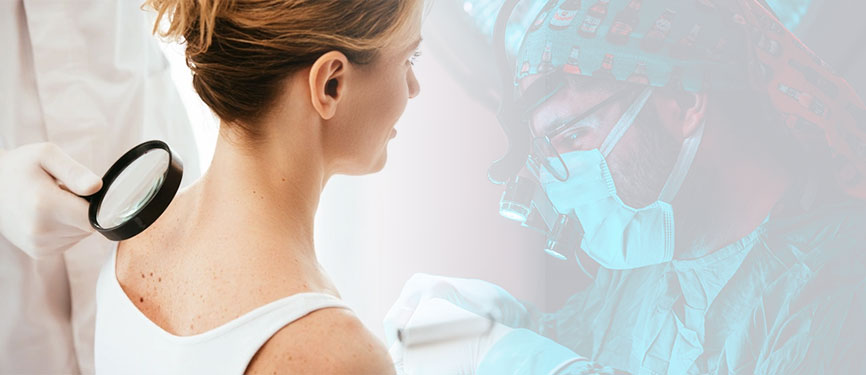
Our skin is the body’s largest organ, covering approximately 1.8 square meters in adults. It is constantly exposed to external elements, particularly ultraviolet (UV) radiation, which makes it vulnerable to various conditions, including skin cancer. Skin cancer is the most common type of cancer worldwide, oneand1 in five people is diagnosed during their lifetime. Fortunately, skin cancer is often highly treatable with early diagnosis and effective treatment.
Am I at Risk for Skin Cancer?
To put it simply, if you have skin, you are at risk for skin cancer. However, certain factors significantly increase the risk:
• Fair skin or a tendency to freckle
• A family history of skin cancer
• History of frequent sunburns
• Living in sunny or high-altitude regions
• Exposure to tar or carbon-based compounds
However, many patients diagnosed with skin cancer may have none of these risk factors, which is why awareness and monitoring are vital.
Common Types of Skin Cancer
- Although cancers can arise from various skin cells, the following three are the most common:
- Basal Cell Carcinoma (BCC) :• The most common type of skin cancer • Usually appears on sun-exposed areas • Grows slowly and rarely spreads to lymph nodes or distant organs
- Squamous Cell Carcinoma (SCC): • Also appears on sun-exposed skin • Grows faster than BCC and can spread to lymph nodes or distant sites
- Malignant Melanoma (MM) :• Originates from melanocytes (pigment-producing cells) • Can develop anywhere on the body • One of the deadliest forms of skin cancer due to its high potential to spread 🔬 A biopsy is crucial before treatment to confirm the type and plan accordingly.
Frequently Asked Questions
Skin cancer typically develops in sun-exposed areas; however, not every skin irregularity is cancer. Nonetheless, suspicious lesions deserve further attention. The advantage of skin cancer is its visibility to the naked eye; therefore, self-examination and timely consultation are essential. Early detection saves lives.
During the initial consultation,
• We will assess your skin concern, medical history, previous treatments, and overall health
• Medical photographs may be taken for documentation
• Dermatology consultation may be requested for full-body skin checks
• A biopsy is performed to confirm the diagnosis
🧪 Note: Even if the lesion is removed during biopsy, this does not count as full treatment. Final treatment planning depends on biopsy results, including the extent of surgery, possible reconstruction, and cosmetic outcomes.
Anestezi: Lokal anestezi, sedasyon veya genel anestezi seçeneklerinden biri tercih edilir.
Tümörün Uzaklaştırılması: Cerrahi sınır gözetilerek tümör çıkarılır. Gerekirse sentinel lenf nodu biyopsisi veya lenf nodu diseksiyonu yapılabilir.
Onarım (Rekonstrüksiyon): Çıkarılan tümör sonrası oluşan defekt, çeşitli rekonstrüktif cerrahi teknikleri kullanılarak onarılır.
Adjuvan (Ek) Tedaviler: Gerekirse radyoterapi veya kemoterapi uygulanabilir.
1. Anesthesia
o Local sedation or general anesthesia was selected based on the procedure.
2. Tumor Removal
o The tumor is excised with clean surgical margins
o In some cases, sentinel lymph node biopsy or node dissection may be required
3. Reconstruction
o The defect created after removal is repaired using reconstructive surgical techniques
4. Adjuvant Treatments
o Radiotherapy or chemotherapy may be added if necessary
Early Risks:
• Anesthesia-related complications
• Allergic reactions to medications or dressings
• Infection, pain, or wound healing issues
Late Risks:
• Noticeable scarring
• Tumor recurrence
• Need for revision surgery
• Systemic spread of the cancer
Recovery depends on the extent of the surgery.
• Rest is essential during the initial period
• Dressings and medications will be used
• Whether stitches need to be removed and when you can return to daily activities will be discussed pre-operatively
• Regular follow-up is crucial
Common treatment methods for skin tumors, particularly in the head and neck area, include the following.
• Surgery: Complete removal of the tumor, sometimes including neck lymph nodes or salivary glands
• Radiotherapy: Uses high-energy beams to kill cancer cells
• Chemotherapy: Uses drugs to destroy or inhibit cancer cells
• Targeted Therapy: Focuses on cancer-specific molecules or mutations
• Immunotherapy: Boosts the immune system to fight cancer
In cases involving the lips, gums, chin, or face, plastic surgeons should ensure the following:
• Tumors are removed without compromising healthy tissue unnecessarily
• Reconstruction maintains both function and aesthetic appearance
• Tissue transfers (flaps) are used to close surgical defects
Postoperative consultation with a plastic surgeon may also be necessary for patients recovering from complex facial tumor surgeries.
✔ Attend regular follow-ups
✔ Keep the surgical site clean and dry
✔ Avoid sun exposure
✔ No showers for the first few days post-op
✔ Avoid swimming pools and the sea
✔ Follow all instructions provided by your surgeon
🛑 Remember: Early diagnosis and treatment of any skin lesion can be life-saving. Be proactive and talk openly with your doctor before and after treatment to play an active role in your care.

Dr. Burak Ergün Tatar
Surgery Process

Preliminary Interview
I have a preliminary meeting with my patients without any time constraints.
Planning
The planning of the surgery time is done in collaboration with my patients.
02

Operation
I perform the operation in our hospital with high technology and equipment.
Follow-up
As a team, we are in contact with our patients for post-operative check-ups or any adverse events that may occur.
04